

- April 8, 2026
- Posted by: Philip Smith
- Category: Uae Real Estate
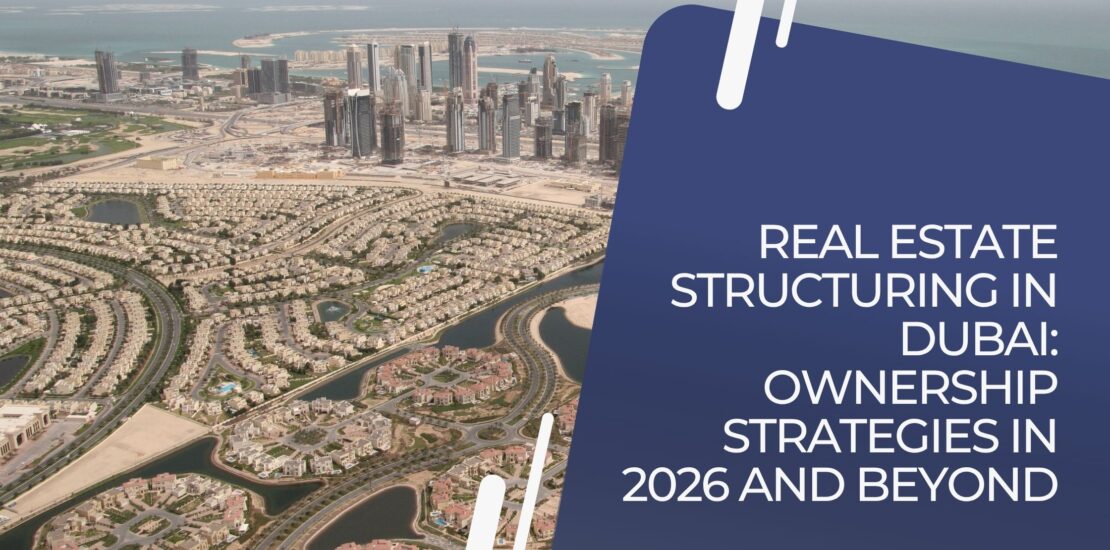
Real Estate Structuring in Dubai: Private Ownership, Foundations, Companies & Other Ownership Strategies in 2026 and Beyond
Dubai’s property market continues to attract global capital, but owning real estate here involves more than finding the right unit and signing a purchase agreement. How you legally hold and organise your property assets—whether in your personal name, through a company, or perhaps via a more robust structure such as a DIFC Presco or ADGM SPV and/or Foundation—determines everything from your exposure to creditors to how your family will inherit your portfolio.
This overview, written and advised on by Your POA Dubai, provides practical, unbiased guidance for both UAE residents and international investors. Founder and Principal Consultant Philip Smith, who holds an LLB from the UK and brings over a decade of experience leading businesses in the UAE, has developed this resource to help readers make informed decisions about structuring property ownership rather than defaulting to whatever seems simplest at closing.
Why Structuring Matters in 2026
Dubai offers significant advantages for investors: zero UAE capital gains tax on property sales, no annual property tax, and a robust registration system through the Dubai Land Department that ensures clear property ownership rights via Oqood Certificates and Title Deeds. Yet cross-border tax obligations and succession rules still require careful planning. A UK resident, for example, may owe income tax on Dubai rental yields and inheritance tax on worldwide assets—regardless of how tax-friendly the UAE appears locally.
In plain terms, real estate structuring means choosing the legal entity that will own your property asset. A single investor buying one apartment might hold it in their personal name for simplicity and Golden Visa eligibility. A family with a portfolio of villas and commercial units, however, might use a DIFC Foundation owning shares in a local JAFZA holding company or as is more common nowadays, an ADGM SPV—ring-fencing assets from personal liabilities and enabling customised succession rules.
The information here reflects 2026 conditions. Regulations evolve, and readers should obtain personalised legal and tax advice before acting. Your POA Dubai’s role focuses particularly on initial consultation, in-house practical implementation (eg Power of Attorney, corporate services, succession documentation), with support from their network of specialist legal associates, CSPs and consultants.

The Growth and Maturation of Dubai’s Real Estate Market
Dubai’s real estate market has demonstrated exceptional resilience through 2023-2025. Year-on-year price increases averaged around 20% across segments, with villa prices specifically exceeding growth since 2024. Transaction volumes have broken records since, surpassing even the most lofty expectations, driven by post-pandemic investment flows from Russia, India, the UK, and Europe.
This performance stands in sharp contrast to other mature markets. Prime residential yields in London and New York are suggested as hovering around 3%, while Dubai delivers 5-7% (and upwards) gross yields in areas like Business Bay, Downtown Dubai, and Palm Jumeirah. For high net worth individuals, family offices, and entrepreneurs seeking diversification, Dubai’s property market offers both capital appreciation potential and income generation that most other global cities cannot match.
Market Maturation Beyond the Boom
The market is maturing rather than simply booming. Regulations strengthened between 2013 and 2023: escrow mandates now protect offplan purchases, RERA oversees rental relationships, POAs can be issued digitally (remotely) for those who reside overseas or simply cannot attend personally, and DLD’s trustee delegation rules streamline how properties can be transacted more quickly and efficiently.
This growth also connects with real estate structuring mechanisms—both in terms of there being better options available for structuring, as well as increased demand and need from local and international investors. As portfolios expand from a single apartment to multiple units or mixed-use buildings, simple individual title becomes less efficient for succession planning, risk profile management, and joint ownership arrangements. Offplan dominance in emerging corridors like Dubai South and Dubai Creek Harbour—where an estimated 60-70% of 2025 transactions occurred—often involves co-investment between spouses or family members from different tax jurisdictions, making proper real estate investment structures essential rather than optional.
Key Ownership Structures for Dubai Real Estate
Dubai permits property to be held directly by individuals, or indirectly through companies and/or Foundations. The current regulations continues to allow for multi-layer structuring such as has been seen historically (e.g, a local company, held by a foreign company). This still works but such setups are expensive to establish and maintain, as well as facing dual legalisation costs and increased bureaucracy. Nowadays there are better and more efficient tools available domestically, however it is important to note that there are certain rules surrounding the type of structure and jurisdiction that can legally hold UAE property assets. The optimal structure also depends on other unique factors, such as residency status, family situation, asset size, and tax profile. There is no universal answer or “one size fits all”—only the answer that fits your specific circumstances. Specialist advice of course remains highly advisable.
Direct Individual Ownership
Sole ownership in an individual’s private name remains the simplest approach. It often suits first-time buyers, or end-users buying a primary residence or a single rental unit. The purchasing process is typically quicker, registration with DLD is straightforward, mortgage options are easier and more favourable (up to 80% loan-to-value for UAE residents), and Golden Visa linkage is direct when meeting the AED 2 million property investment threshold. In short, it works—but is not without its limitations and indeed risks. The downsides (and rather significantly): assets remain exposed to personal creditors, default Sharia laws apply to Muslim owners, and the UAE’s default civil inheritance rules to non-Muslim owners—unless overridden by a properly registered Will, such as a DIFC Will.
Joint Ownership
Joint ownership (e.g, with a spouse or partner) is another popular approach, particularly with expats who are used to such practices in their home country, where there is often joint tenancy rules in play, such as rights of survivorship. Things operate differently in the UAE however and so this matters significantly for foreign investors who are spouses or family members purchasing together, especially when it comes to death or sale. DLD implements explicit ownership or property share rights with distinct shares and there is no automatic survivorship rule in the UAE so again there is the risk that UAE’s default inheritance rules may apply, which can lead to legal uncertainty, delayed probate/estate administration and even unwanted distributions and family disputes.
Corporate Structures
Onshore, mainland LLCs registered with Dubai’s Department of Economy and Tourism are able to hold Dubai real estate and they provide liability limits and some security for landlords with 2-10 units or those entering joint ventures. However, these entities can be less flexible and quite bureaucratic in terms of setup and upkeep. They also face 9% UAE corporate tax exposure on business activities unless qualifying for small business relief (under AED 3 million revenue).
Certain freezone and offshore companies—JAFZA, DMCC, IFZA, RAKEZ, RAKICC, as well as ADGM SPVs—are also DLD-approved for freehold ownership in designated areas like Palm Jumeirah, Arabian Ranches, and JLT. They allow 100% foreign ownership and privacy (although limited), as public records show the legal entity name rather than individual beneficial owners. Note that UBO disclosures are required under UAE’s 2022 Cabinet Resolution for anti-money laundering and other compliance measures. Such structures can be useful for asset consolidation but other limitations—such as legacy planning, probate concerns and tax efficiency—still remain, including in cases where the UAE company is coupled with an offshore or overseas company/holding company.
Practical constraints matter: DLD maintains an approved list of freezones that can own property in designated zones, consideration should also be given to the risks involved when structuring under an operating entity (rather than a specific holding activity or via a dedicated, passive vehicle, as offered at ADGM, DIFC and RAKICC), banking KYC and increasing AML rules demands UBO transparency (typically 25%+ stakes), and corporate structures can add significant costs annually in upkeep/compliance costs compared to personal ownership. UAE Corporate taxation must also be considered.
Foundations, Prescos and SPVs
DIFC Prescribed Companies, ADGM SPVs and/or Foundation structures, available both in DIFC and ADGM (and indeed RAKICC), are commonly used nowadays to serve HNW families with multi-jurisdictional assets, portfolios or higher value properties. They are also becoming more amenable and popular across the board—including for the “average” or “everyday” investor. Real estate assets can either be held directly where permitted by the Foundation itself and/or via passive vehicles such as Prescos/SPVs.
Example: A typical structure that has gained popularity in recent years is an ADGM SPV (or DIFC Presco) owning Dubai real estate asset(s), and which is in turn owned by a DIFC Foundation.

DIFC Foundations and Holding Companies
A DIFC Foundation, governed by DIFC Law No. 3 of 2018, functions as a separate legal entity without shareholders. Instead, it operates through a council appointed by the Founder and exists for purposes defined in its Charter—commonly asset protection, family governance, and succession planning.
A DIFC Foundation can hold Dubai real estate either directly (where permitted) or by owning shares in a DLD-approved property holding company such as a JAFZA company, DIFC Prescribed Company (Presco) or ADGM Special Purpose Vehicle (SPV). Consider a non-resident family placing five Business Bay apartments into a Foundation-owned DMCC company: the properties pass to beneficiaries according to customised Bylaws rather than through personal probate, avoiding the 6-12 month+ delays common in intestate situations.
Key Benefits
Asset protection stands paramount. Ring-fencing properties from the owner’s personal liabilities protects entrepreneurs and business owners whose commercial activities carry litigation risk. Succession rules can align with Sharia distributions, or implement non-Muslim preferences through DIFC Wills and Foundation Bylaws. Privacy improves because DLD records show the Foundation (or company) as owner rather than individual family members.
Integration with Other Entities
DIFC Foundations interact seamlessly with other structures. They can own freezone property or other holding companies (DMCC, JAFZA, RAK for example) and use prescribed companies as project-specific SPVs—one per villa or building, for instance. For families with global estates, Foundations can (where permitted) co-own offshore structures holding non-UAE assets.
Tax Positioning
UAE Corporate Tax came into play from June 2023 however development in application rules since allows certain structures (such as Foundations) to elect fiscal transparency, avoiding entity-level taxation. While UAE typically does not tax rental income or capital gains from personally held property, home-country treatment varies significantly. UK residents can face 20-45% income tax on Dubai rents with no treaty credit unless structured appropriately. EU CFC rules may affect offshore companies.
A significant advantage with a Foundation is that a Foundation can apply to be treated as “tax transparent” for Corporate Income Tax purposes where specific conditions are met. In such cases, the Foundation’s income can fall out of UAE Corporate Tax scope.
Practical Setup Steps
Establishing a DIFC Foundation involves engaging a DIFC-registered corporate services provider, drafting the Charter and Bylaws, appointing the Council, and ensuring alignment between Foundation documents, any DIFC Will, and DLD registration. Costs typically range from $5,000-10,000 (and upwards), depending on whether additional fiduciary services, nominee services and/or corporate governance or secretarial services are required.
Individual vs Corporate vs Foundation Ownership: Choosing the Right Path
No universal “best” solution exists. Choices depend on deal size, asset portfolio or value, family profile, and whether your priority is simplicity, privacy, financing flexibility, or succession planning.
Individual Ownership
For a 1-2 unit investor, individual ownership remains simplest. Banking and mortgage approvals proceed faster, the purchasing and DLD registration process is lighter, and the direct connection to residency and Golden Visa thresholds remains a notable advantage. The trade-off: assets stay exposed to personal creditors and risk (especially for Muslims), and inheritance for non-Muslim expatriates follows UAE civil rules unless a DIFC Will (costing AED 5,000-10,000) is registered.
Consider a UK national owning a single JVC apartment for rental income. Individual ownership plus a well-drafted Will may prove adequate—the administrative burden of corporate ownership likely outweighs benefits for a single property value under a few million AED.
Corporate Ownership
Corporate structures may suit some investors with multiple units or joint ventures. A mainland LLC or UAE company allows for clear profit-sharing and some asset consolidation, however incorporation/renewal costs and annual maintenance can add up, corporate mortgages are typically challenging, not to mention other ongoing limitations, including exposure to risk and corporate tax inefficiency.
Similar drawbacks applies for a UAE company that is owned by an offshore or overseas holding company. This was the traditional “go-to” approach for many investors in the past but is clearly an archaic practice of another era, particularly as it also involves substantial red-tape, including lengthy and costly dual legalisation procedures overseas.
UAE Foundation + UAE Holding Company
Foundation-based structures dominate for HNW and Ultra-HNW families. A GCC family acquiring a commercial building in Dubai Hills Business Park might combine a passive company (holding the property) with a DIFC Foundation (holding the company shares). The Foundation provides superior asset protection, perpetual duration, and governance mechanisms—as well as allowing the Founder to maintain control over major decisions. Setup and ongoing governance costs are higher but long-term and comprehensive dispute prevention and asset protection can often justify the investment.
It is certainly a more modern and robust approach with many key benefits, for many different types of investor. This form of structuring can remove (or at least mitigate) a number of concerns that we have touched upon in this overview, including those relating to legacy planning, probate avoidance, asset consolidation and protection, firewalling/shielding, and privacy concerns. It is a highly optimal option for many investors, particularly popular with those with larger portfolios or where needing more sophisticated protections.
Beware: UAE Corporate Tax applies on income-generating real estate!
UAE Foundation
Arguably the new “go-to” option for investors, and no longer just for the wealthy. ADGM and DIFC Foundations are in particular a simplified and tax-efficient option for Dubai real estate ownership, covering the most important concerns for most investors and families—being succession and tax optimisation. They also suitably avoid unnecessary red tape found in traditional overseas structures whilst also addressing succession concerns (for both Muslims and non-Muslims) and protection against unwanted claims. The property is removed from the private estate of the Founder and therefore becomes off-limit from succession and/or creditors’ claims. It is also highly private as well as being UAE Corporate Tax efficient. A win-win.
What Does Not Work?
Putting aside the pro/cons of the different structuring options for a moment, it is worth adding a quick note as to what does not work for Dubai real estate holding:
- Foreign Trust: A trust is a common‑law fiduciary arrangement and civil‑law jurisdictions typically don’t recognise trusts as autonomous legal persons. This includes DLD. DLD requires the registered owner to be a natural person or an approval legal entity with clear, documented incorporation, locally recognised beneficial ownership and signatories. Trusts (especially foreign ones) lack the required legal personality or structure required, and DLD title rules and the official title deed system expect named beneficial owners for the public register.
- Offshore Holding Company (directly owning real estate): It is no longer possible for an offshore or overseas company to directly holding Dubai property. Changes in practices and rules mean that the DLD now insists on only UAE‑acceptable incorporated companies holding Dubai real estate directly. As a result, the DLD requires establishing a UAE‑registered vehicle (onshore LLC or a locally authorised freezone company with permitted property ownership status), which can in turn be owned by either another domestic vehicle (e.g, DIFC Foundation) or an overseas company (less optimal).

Overview Chart: Real Estate Structuring Options + Features:
| Ownership Structure/Type | Asset Consolidation | Asset Protection | Legacy Planning | Probate Ease | Privacy | Tax Optimisation |
|---|---|---|---|---|---|---|
| Foreign Trust | N/A | N/A | N/A | N/A | N/A | N/A |
| Offshore Company (Individual) | N/A | N/A | N/A | N/A | N/A | N/A |
| Private (Individual) | No | No | No | No | No | Limited |
| Private (Joint) | No | No | No | No | No | Limited |
| UAE Company + Offshore Company | Yes | Limited | No | No | Limited | No |
| UAE Company (Individual) | Yes | Limited | No | No | Limited | No |
| UAE Foundation + UAE Company | Yes | Yes | Yes | Yes | Yes | No |
| UAE Foundation | Yes | Yes | Yes | Yes | Yes | Yes |
Overview Pro/Cons: Real Estate Structuring Options + Features:
Private Ownership:
Pros: Straightforward, fast & cost-efficient; Golden Visa eligibility
Cons: Limited benefits – no continuity, no consolidation/segregation, forced heirship/inheritance & probate concerns, no asset protection, no privacy, limited-to-no tax protection
Summary: Works ok for many but certain risks remain—particularly regarding succession (tip: highly advisable for non-Muslims to register a DIFC Will)
UAE Company + Offshore/Overseas Company:
Pros: Can consolidate assets; possibly useful for transferring/managing balance sheet
Cons: Old-fashioned, becoming obsolete (better tools available now); cross-border issues & reporting, no legacy planning/probate avoidance, limited asset protection & privacy + corporate tax concerns
Summary: Still available but dated, expensive & considerable red-tape (dual legalisation/other costs)
UAE Company (Individual):
Pros: Can consolidate assets; holding company combined with Will can be a good option for some
Cons: Incorporation/renewal costs & ongoing compliance/maintenance requirements; fewer other benefits – limited asset protection & privacy, not tax efficient (corporate tax applies)
Summary: An option for some but with clear drawbacks, particularly re upkeep costs & corporate tax
UAE Foundation + UAE Company:
Pros: Effective/sophisticated option & aligned with international practices; addresses most benefits, incl, consolidating multiple asset classes (incl. business assets, real estate, financial portfolio), ability to protect assets/segregate assets, and also effectively addresses legacy/succession planning
Cons: More compliant heavy with upkeep/governance requirements & costly as multi-tier structuring; can be overkill for some cases; Corporate Tax potential applicable on income-generating real estate
Summary: Solid option, covering most bases but possible corporate tax concerns (may still apply)
UAE Foundation:
Pros: Most robust/simplified tool available now locally, effectively covering all concerns under one domestic tool—including asset consolidation & protection, succession ease and probate avoidance, privacy and significantly, tax optimisation
Cons: Again can be compliant heavy; added upkeep/governance requirements & costs (lawyer/CSP fees etc)
Summary: Most comprehensive, simple, efficient—ticks all boxes (especially for succession planning and tax optimisation, as can be considered “transparent” for UAE Corporate Tax purposes)
Other Legal, Tax and Compliance Considerations
Understanding the regulatory requirements landscape prevents costly surprises. Several authorities govern different aspects of real estate structuring.
Key Regulators
The Dubai Land Department handles property registrations, title deeds and property ownership transfers. RERA oversees tenancy matters, escrow, and developer regulation. The Department of Economy and Tourism registers onshore companies, whilst there are also a plethora of freezones each with their own rules and regulations. The DIFC/ADGM governs Foundations, Prescos and SPVs, while the Federal Tax Authority administers Corporate Tax and VAT where applicable.
Due Diligence Essentials
Proper due diligence includes title checks at DLD, service charge audits, and verification of building completion and escrow compliance for offplan purchases. Confirm DLD’s current list of approved freezones and offshore jurisdictions permitted to own property in freehold areas—this list updates periodically.
Dubai-Side Taxes and Fees
Each property transaction typically incurs a 4% DLD transfer fee plus administrative charges (although in some special cases, ownership transfers can be conducted at a reduced rate of 0.125%). No capital gains tax or annual municipal property tax applies to freehold ownership, though ongoing service charges commitments, property maintenance and utility deposits must be budgeted for. UAE Corporate Tax (9% standard rate from 2023) may apply to corporate-held real estate businesses—particularly those conducting active management rather than passive holding.
Foreign Tax Considerations
The lack of capital gains, inheritance or personal income tax in the UAE does not mean there are no tax risks to think about. UK residents potentially face UK income tax on Dubai rents (rates up to 45%) and 40% inheritance tax on worldwide estates exceeding £325,000. European residents may encounter CFC rules and anti-avoidance provisions that can look through offshore companies to attribute income. Specialist advice from cross-border tax specialists remains paramount.
Sharia and Inheritance Planning
UAE inheritance rules apply Sharia by default to Muslim owners, allocating fixed shares to heirs. Non-Muslims can use DIFC Wills (or in certain cases request home-country Wills, with local probate acceptance) to direct Dubai assets differently. Non-Muslims who die intestate do however still run the risk of default inheritance rules that may not meet their intentions, especially in more complex family arrangements. Foundations and holding companies can help to implement agreed family succession plans and avoid disputes or other claims—embedding ownership rights and distribution rules in Bylaws rather than relying on contested, lengthy and uncertain probate proceedings.
Philip Smith’s legal background and Your POA Dubai’s practical experience prove particularly valuable when dealing with DLD and court procedures in inheritance and property related situations.
Your Structuring Checklist
First look at your specific situation and clarify your goals—whether prioritising income yield, capital growth potential, asset protection, estate planning and/or family security. Map personal and family circumstances including heirs’ locations, ages, and risks. List existing and planned UAE and non-UAE assets. Review home-country tax and estate rules with qualified legal advisors. Then choose your structure with professional input and implement carefully with aligned corporate structures, contracts, Wills, and Powers of Attorney.
Your POA Dubai supports these next steps by acting under Power of Attorney at DLD, developer offices, and banks, as well as coordinating with DIFC Foundation providers, CSPs, Will-drafting specialists, lawyers, and tax advisors, and oversees inheritance, court, and transfer procedures when owners pass away and executors, heirs and/or families require expert local support.
So What Does this All Mean in Practice?
Over the last few years there has been a shift in both perception and indeed decision-making when it comes to real estate structuring in Dubai. Things have evolved from the old days and the traditional “go-to” structuring approaches (e.g, property > JAFZA > BVI/Cayman Islands) are fast becoming obsolete. Registering a property in a private name (or perhaps a RAKICC company) combined with a DIFC Will is a valid option for many people (particularly non-Muslims) but nowadays, domestic structures found in jurisdictions such as the ADGM and DIFC, including both companies and also other structuring tools such as Foundations, offer more simplified and efficient mechanisms for protecting real estate assets, whilst having the added benefits of improved asset segregation, protection and succession planning.
Structures such as a DIFC or ADGM Foundation with an added passive structure (e.g, Presco/SPV) are becoming increasing popular for many investors, not just the super wealthy. Alternatively, a DIFC or ADGM Foundation directly holding real estate can be used very easily to combine all benefits under one single, domestic tool. Following updates re UAE Corporate Tax, Foundations can now also benefit from increased Corporate Tax efficiency, with in most cases this not applying (perhaps even where there is an underlying passive entity involved).
In addition, transferring property from a private name to a corporate structure or Foundation has become increasingly easier and in certain instances cheaper also, where donating or “gifting” rates can apply at DLD (0.125% of current valuation rather than the normal 4% DLD charges levied in sales or purchase transactions).
Looking Ahead
Structuring trends through 2030 point toward increased family office adoption, greater use of more robust structures such as those available at DIFC and ADGM with sophisticated governance, and closer integration with global tax efficiency rules as the UAE aligns with OECD frameworks. A proactive approach to structuring today—rather than reactive fixes after problems emerge—saves in remediation costs and prevents disputes that can fracture families and future plans.
Whether you hold a single apartment or manage a diverse portfolio, the investment decisions you make about structuring are significant today but will also echo for generations. Seek qualified legal and tax advice for your specific situation. For advice or practical support with corporate setups, real estate structuring, property transfers, Powers of Attorney, and/or succession administration in Dubai, Your POA Dubai stands ready to assist.
