

- April 24, 2026
- Posted by: Philip Smith
- Category: News/Blog
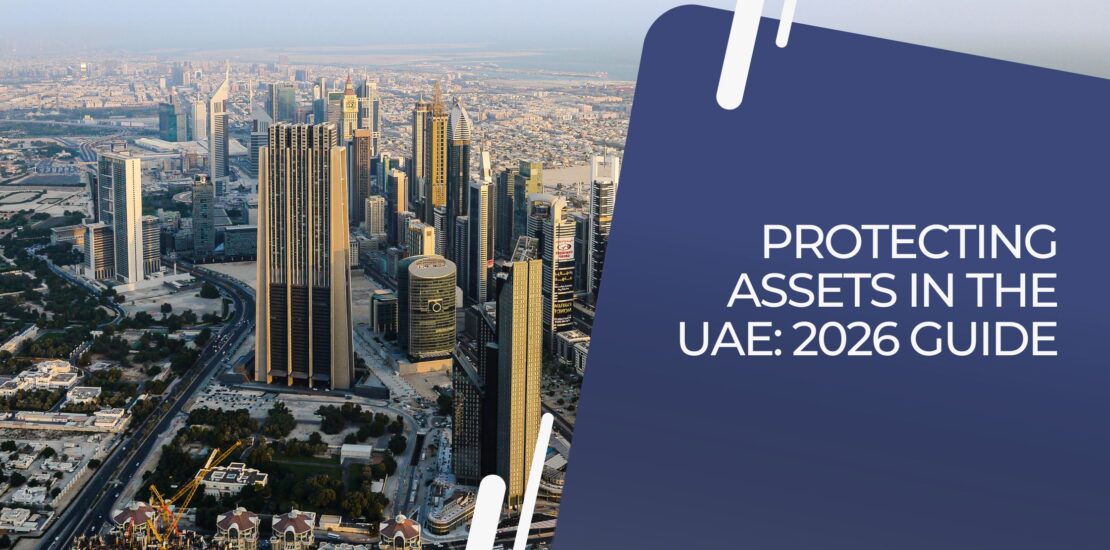
Protecting Assets in the UAE: 2026 Guide for Residents, Expats & Business Owners
The UAE now hosts approximately 10 million expatriates—roughly 89% of the total population—drawn by political stability, economic substance, and a tax-efficient environment that continues to attract global investors. Whether you own property in Dubai, hold shares in a mainland or freezone company, or maintain significant financial accounts across the Emirates, understanding how to shield assets from unintended consequences has never been more important.
This article explains how to protect property, bank accounts, business shares, and family wealth in the UAE in 2026, with some practical steps and concrete examples. Written from the perspective of Your POA Dubai and its Founder and Principal Consultant Philip Smith (UK L.L.B, over 10 years’ experience in UAE property and succession matters)—the guidance remains neutral and educational.
Asset protection in the UAE in its simplest context means addressing:
- Inheritance risks under local laws that may override your home-country expectations
- Understanding the distinction between Sharia law and civil regimes for non-Muslims
- Creditor claims against personal assets or business entities
- Family disputes and legal disputes that arise from unclear ownership
- Sudden incapacity leaving assets without proper management
- Cross-border complications affecting personal wealth globally
Key tools covered include UAE Wills, DIFC and ADGM structures, corporate structuring and governance, real estate planning, insurance, and creditor risk management.

What Is Asset Protection in the UAE? (And How It Differs from General Wealth Planning)
Asset protection refers to using specific legal structures and documentation to shield assets—real estate, company shares, bank accounts, investments—from unintended heirs, forced heirship rules, creditors, and avoidable court procedures and delays. This is distinct from simple tax optimisation or investment planning.
- In the UAE, succession and control upon death or incapacity are often the primary risks, not income tax—since the UAE has no personal income, capital gains, or inheritance taxes
- An expatriate family with a Dubai villa and joint accounts risks seeing assets frozen and subsequently divided under default rules that differ or ignore their foreign Will or intentions
- A business owner with shares in a mainland LLC faces potential blocks, legal issues or even forced sales if shareholder agreements lack death or incapacity provisions
- An investor holding multiple offplan properties may encounter developer delays, payment issues or defaults and potential legal issues compounded by heir disagreements or probate delays
- Relevant legal frameworks include the UAE Civil Code, Federal Decree-Law No. 41 of 2022 on Civil Personal Status, and also certain freezone regulations found in DIFC, ADGM, and RAK ICC
- Effective asset protection must be proactive—once a legal claim, divorce, or creditor action starts, options become more limited, procedurally challenging and time-consuming
Understanding UAE Inheritance & Personal Status Laws (Sharia vs Civil for Non-Muslims)
Succession often remains the single biggest asset protection concern for expats. Local laws may override expectations from your home country, making succession planning essential.
Traditional Sharia-based inheritance allocated fixed portions to heirs with no automatic survivorship rules—or “everything to spouse” provision. Federal Decree-Law No. 41 of 2022 changed this landscape significantly for non-Muslims—however certain risks still remain, particularly for those with more complex family situations (think blended families, stepchildren, or even the risk of siblings inheriting shares of assets)
- Under the new civil regime, non-Muslim expats’ UAE assets may default to a 50/50 split between surviving spouse and children—still problematic for young families or blended families needing more intentional or flexible distributions
- Muslims remain largely subject to Sharia inheritance laws, while non-Muslims operate between national law, UAE civil rules, or freedom of testimony via registered DIFC Wills and ADJD Wills
- Simply put, without proactive action, you endorse defaults that rarely match expat expectations
- The “do nothing” approach carries real legal consequences—not planning is itself an active decision
Wills in the UAE: DIFC, ADJD and Onshore Options
A properly drafted and registered Will remains the most basic form of asset protection for most expats with property or certain assets in the UAE. It is estimated that the DIFC Wills Service Centre has processed over 10,000 Wills to date, offering common-law procedures, with probate typically completed in around 4 weeks—considerably faster and more certain than administration procedures carried out via the onshore personal status courts, which can take up to 1-2 years in certain cases.
| Feature | DIFC Wills (Dubai)
[the “Gold Standard”] |
ADJD Wills (Abu Dhabi) | Dubai Courts Wills (Dubai) |
|---|---|---|---|
| Jurisdiction | Dubai, RAK, others via execution (*incl. potential global coverage) | All Emirates | All Emirates |
| Eligibility | Non-Muslims (only) | Non-Muslims + Muslims | Non-Muslims + Muslims |
| Legal basis | English common-law | UAE Civil Personal Status Law (Federal Decree-Law No. 41 of 2022) | Sharia, or Federal Decree-Law No. 41 of 2022) |
| Language | English (only) | Bilingual (English + Arabic) | Typically Arabic (only) |
| Procedure | Fully digital; video registrations; witnesses required; private & secure | Public notary system at ADJD; online registrations; witnesses optional/not mandatory | Public notary system at Dubai Courts; witnesses not permitted |
| Procedural predictability | High | Medium-High | Variable |
| Probate timeline | 4-6 weeks | Similar to DIFC (potentially longer) | 6-12 months + |
| Best for | UK/EU expats; those familiar with common-law systems; Dubai heavy/international assets; comprehensive coverage/certainty | Cost-effective option; those with assets primarily in UAE & with Abu Dhabi specific assets; additional options for Muslims also | Alternative option; those with Dubai assets & who prefer to keep within same court system |
- DIFC Wills Service Centre serves non-Muslim adults covering Dubai, Ras Al Khaimah, as well as broader applicability across other Emirates through execution orders
- ADJD extends similar procedures, covering all seven UAE Emirates at a lower price-point
- Assets to cover specifically: UAE real estate, LLC shares, local bank accounts, brokerage accounts, vehicles etc
- Practical considerations include appointing UAE-resident executors &/or advisors, guardianship clauses for minors, and alignment with foreign Wills to avoid potential probate conflicts
Other Options – DIFC & ADGM Foundations
Foundations have gained increasing popularity in the UAE over the last few years and have now become powerful tools for larger estates and complex family situations. Clients with larger or higher value portfolios, family businesses or multi-generational wealth can benefit from setting up a DIFC or ADGM Foundation to work in parallel with their Will, ensuring strategic succession and asset distribution.
- DIFC and ADGM Foundations allows for holding of UAE and international assets with privacy advantages, asset preservation, succession benefits and protection against claims or creditors
- UAE Foundations can hold a family business or portfolio of Dubai apartments, distributing per charter rules and avoiding heir freezes, delays or unwanted distributions
- Additional or supplementary holding companies, Prescos or SPVs can be used to ring-fence risks, segregate business operations from personal property or investments
- Added compliance, ongoing corporate governance requirements, as well as higher setup and maintenance costs typically makes them more suitable for significant assets rather than few assets
Structuring Business & Investment Holdings for Protection
How you own assets matters as much as which assets you own. Limited liability companies provide certain protection under UAE commercial company laws, but structure determines actual security.
- Mainland LLCs and Freezone companies (such as IFZA, RAKEZ, DMCC, Dubai South) offer limited liability, with the Memorandum of Association generally governing control and succession—with notable limitations and ongoing risks when it comes to asset protection
- Holding companies ring-fence risks: segregate high-risk trading businesses from stable real estate investments
- Shareholder agreements can be used (particularly in ADGM structures) to include customised shareholding arrangements, drag-along/tag-along clauses, pre-emption rights, and buy-sell mechanisms for death or incapacity
- Avoid informal nominee arrangements—UAE courts prioritise registered titles, and mismatched records can invalidate claims or inferred rights

Real Estate Protection: UAE Property, Joint Ownership and Succession
Real estate assets often dominate UAE investment portfolios, for both local families and expats.
- Sole ownership exposes property to default inheritance rules; joint ownership does not guarantee survivorship without proper legal documents (generally speaking, such rules do not apply in UAE)
- Common scenario: expat dies intestate, AED 3m villa frozen, bank accounts and property locked pending court orders, and/or in some cases even heirs disputes leading to forced auction/sales
- Protection tools include registering a Will at DIFC (non-Muslims) or ADJD, and/or placing multiple units into Foundations, and clear beneficiary rules for income and succession
- Your POA Dubai provides advice, coordinating Wills drafting/registrations, estate administration support and Power of Attorney representation services managing transfers, registrations, and court processes for executors and/or heirs living abroad
- Coordinate mortgage arrangements with life insurance to prevent defaults or even forced property sales on death or disability
- Real estate investments require alignment between title documentation and estate planning
Marital Agreements, Family Governance and Divorce Risks
Many expatriates overlook how marriage, divorce, and remarriage affect UAE-based assets—particularly when one spouse holds all property in their name only. This is a topic for another day but below are some basic notes to also think about.
- Foreign marital property regimes may be relevant in UAE courts via choice-of-law and recognition principles (not guaranteed—subject to proper documentation and court approvals)
- Risks include second marriages with children from previous relationships and unrecorded financial contributions to property purchases
- Written, legally reviewed agreements—marital contracts, loan agreements between spouses—clarify intentions even when not labelled as prenups
- Family charters for wealthier families establish decision-making rules and dispute-resolution mechanisms
- Planning cannot defeat legitimate spouse or child maintenance rights under UAE public policy
Insurance, Banking and Creditor Protection in Practice
Asset protection planning can also extend beyond legal structures to practical risk management through insurance and banking arrangements.
- Life insurance can provide liquidity to pay mortgages, school fees, liabilities, or foreign taxes
- Separating business accounts from personal reserves limits exposure to business liabilities
- Creditor claims can arise from personal guarantees, security cheques, and unpaid debts affecting travel and residency
- Retirement plans and other financial accounts should designate beneficiaries where banks allow
Cross-Border Considerations for International Families
Most UAE asset-owners maintain connections to at least one other jurisdiction—home country passports or domicile, foreign property, overseas companies, or pensions.
- A UAE Will might interact with UK, EU, or Indian Wills—risk of accidentally revoking foreign Wills exists without explicit situs-limited wording
- Forced-heirship rules in home countries (France, for example) and worldwide estate tax exposure (UK inheritance tax at standard 40% rate over £325K) affect holding structure and planning decisions
- Some foreign courts may not recognise UAE Wills or Foundation structures, requiring coordinated planning
- Work with advisors understanding both UAE law and also access to home-country regime advice and who can coordinate legal documents across languages and jurisdictions
Working with Specialists: Role of Lawyers, POA Services and Consultants
Successful asset protection requires coordination among legal professionals, corporate service providers, banks, and practical representatives.
- Local lawyers or specialists such as Your POA Dubai can handle court and inheritance matters; DIFC/ADGM practitioners manage Wills and Foundations
- Corporate lawyers or CSPs can review and restructure business operations; financial planners align investments and insurance
- Your POA Dubai, led by Philip Smith with over a decade of UAE experience, supports heirs and owners with practical execution—property transfers, bank correspondence, court procedures—especially when families live abroad
- Verify licenses, regulatory status, and experience before engaging any advisor
- Prepare a basic asset inventory (properties with title deed numbers, companies, bank accounts, liabilities) before consultations to maximise efficiency
Conclusion: Practical Next Steps to Protect Your Assets in the UAE
Asset protection in the UAE in 2026 centres on three basic pillars: clear legal instruments (Wills, Foundations, agreements), thoughtful ownership structures for business and property, and practical risk management through insurance, banking, and other debt control/management measures.
Basic Action Plan:
- Compile a UAE and global asset list with title references and account details
- Review/consider current ownership and beneficiary designations
- Consult a qualified UAE lawyer or specialist consultant experienced in expat matters
- Put a valid UAE-recognised Will in place—DIFC or ADJD are good for most non-Muslims
- Consider advanced structures (Foundations, SPVs/holding companies) if holding significant assets
- Review the plan every few years, and/or after major life events
UAE laws have and continue to evolve—Federal Decree-Law No. 41 of 2022 being a key example that offers greater degree of control for non-Muslims and international families aligning UAE assets with global estate plans—and your plans should too. Your POA Dubai has spent over a decade observing how well-planned estates transfer smoothly while unplanned ones create avoidable stress, cost, delay, uncertainty, and risk.
This article provides general information to offer a basic overview of some options and strategies to help you maximise asset protection—always seek personalised professional services and legal advice before making decisions affecting your personal wealth and financial stability.
